How Does the TikTok Algorithm Actually Work in 2026?
Ruben Chamberlain · 2026-08-03
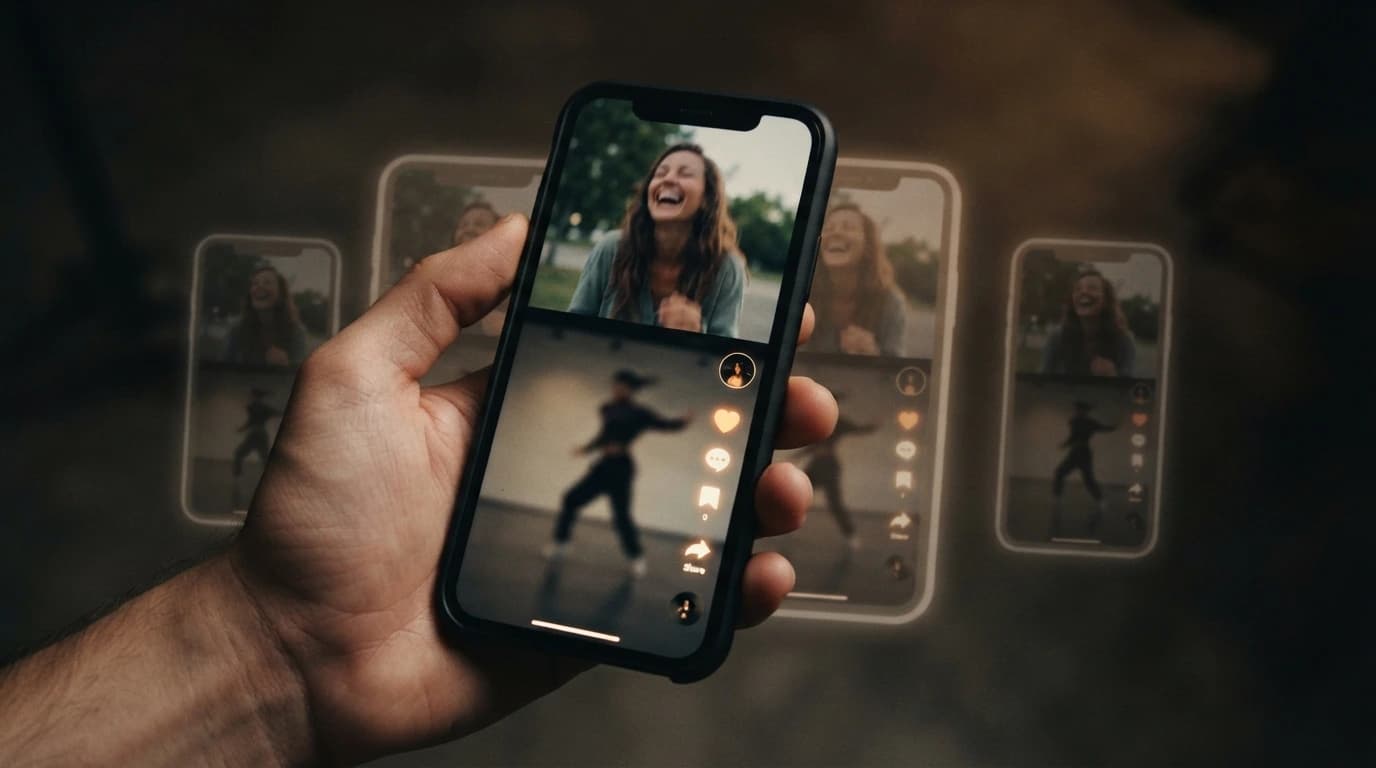
TikTok doesn't rank videos the way Instagram or YouTube do. There's no single "algorithm" toggling on and off — every video gets tested on a small batch of viewers first, and how that batch reacts decides whether it goes further. Here's what actually drives the For You Page in 2026, and what quietly caps reach without you noticing.
The For You Page Is a Series of Tests, Not a Ranking
Every video TikTok publishes goes through the same funnel: it's shown to a small pool of viewers first — often a few hundred people, a mix of followers and strangers. If that pool watches, likes, comments, shares, or rewatches at a strong rate, TikTok pushes it to a bigger pool. If that pool also responds well, it goes bigger again. Most videos never make it past the first or second round — that's normal, not a penalty.
This is why a brand-new account with zero followers can outperform an account with 50,000 followers on a single video. Follower count barely matters to this loop. What matters is how the first few hundred strangers react.
Completion Rate Is the Strongest Signal
Of everything TikTok tracks, watch-through rate — how much of the video people actually finish, and whether they rewatch it — is the single strongest predictor of how far a video travels. A 15-second video watched to the end (or looped) sends a much stronger signal than a 60-second video abandoned at the 10-second mark, even if the longer one gets more total watch-seconds.
That's why the first 1-2 seconds matter so much: if the hook doesn't hold attention immediately, the completion rate craters before the rest of the content gets a chance to work.
Shares and Saves Outweigh Likes
Likes are the weakest engagement signal TikTok has — they're cheap, and everyone knows it. Shares (sending a video to someone directly, or reposting it) and saves (bookmarking to watch again) are much stronger, because they require more intent. A video with a modest like count but a high share-to-view ratio will consistently outperform a video with tons of likes and almost no shares.
If you want a video to travel, give people a reason to send it to someone specific — that's a much stronger push than asking for a like.
What Actually Suppresses Reach
TikTok doesn't publish an exact list, but a few patterns show up consistently in how distribution gets throttled:
- Reused audio or video flagged elsewhere for spam — sounds and clips that got mass-reported on other accounts can quietly cap distribution for anyone using them.
- A sudden posting pattern that looks automated — bursts of uploads at unnatural intervals, or the exact same caption structure every time, reads as bot-like behavior to the review systems.
- Low completion rate across several videos in a row, not just one. One flop is normal; a sustained pattern tells TikTok your content isn't matching your audience.
- A follower spike that doesn't match engagement — this is the scenario worth understanding on its own, since it's the one purchased followers can actually trigger.
Consistency Beats Frequency
Posting five videos in one day and then going quiet for two weeks performs worse than posting one solid video every 2-3 days consistently. TikTok's ranking system re-tests your account's recent performance each time you post — a steady pattern of videos that perform reasonably well trains the algorithm to keep giving your content wider initial test pools. A boom-and-bust posting pattern resets that trust more often than it builds it.
The Bottom Line
The TikTok algorithm isn't rewarding follower count, verified status, or how long you've had the account — it's re-testing every single video against a fresh audience and deciding in real time whether to push it further. The accounts that consistently win are the ones whose videos hold attention in the first two seconds and give people a reason to share, not the ones with the biggest existing following. The same principle that applies on Instagram holds here too: the platform is optimizing for behavior that looks real, not for raw numbers.
Looking to grow your Instagram?
Ruben Chamberlain
Ruben handles content at LikeMetrics — which mostly means reading a lot of Instagram Help Center changelogs so you don't have to, and rewriting guides whenever something we said stops being true. They'd rather publish six months late than publish something wrong, which is why you won't see round numbers or guaranteed outcomes in these posts. If a claim looks suspiciously precise, it's usually the exception they checked, not a guess they dressed up.